| Size | Price | Stock | Qty |
|---|---|---|---|
| 5mg |
|
||
| 10mg |
|
||
| 25mg |
|
||
| 50mg |
|
||
| 100mg |
|
||
| 250mg |
|
||
| 500mg | |||
| Other Sizes |


Purity: ≥98%
| Targets |
Selective inhibitor of diacylglycerol acyltransferase 1 (DGAT1) with the following inhibitory parameter:
- IC50 = 12 nM (recombinant human DGAT1); no significant inhibition of DGAT2 (inhibition rate <5% at 10 μM) [1] |
|---|---|
| ln Vitro |
A922500 (A-922500) exhibits remarkable selectivity compared to other acyltransferases, such as DGAT-2 (IC50=53 μM) and the members of the phylogenetic family, acyl coenzyme A cholesterol acyltransferase-1 and -2 (IC50=296 μM) [1].
DGAT1 enzyme inhibitory activity: - A922500 inhibited recombinant human DGAT1 in a concentration-dependent manner: - 1 nM inhibited 28% of DGAT1 activity; - 10 nM inhibited 72% of DGAT1 activity; - 100 nM inhibited >90% of DGAT1 activity; - The half-maximal inhibitory concentration (IC50) was determined as 12 nM via curve fitting [1] - Inhibition of triglyceride (TG) synthesis in hepatocytes: - In human hepatoma HepG2 cells, A922500 (10–1000 nM) reduced de novo TG synthesis in a concentration-dependent manner: - 100 nM A922500 decreased [14C]-oleate incorporation into cellular TG by 45% (compared to vehicle control); - 1000 nM A922500 decreased TG synthesis by 78%, with no significant effect on cell viability (>90% viability via MTT assay) [1] |
| ln Vivo |
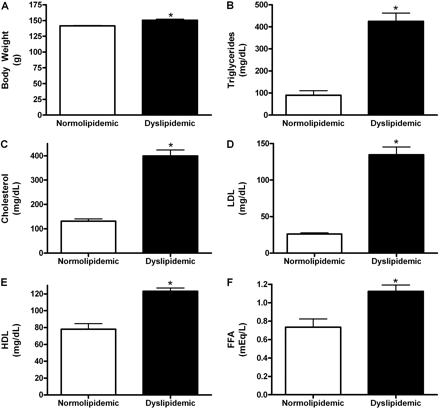
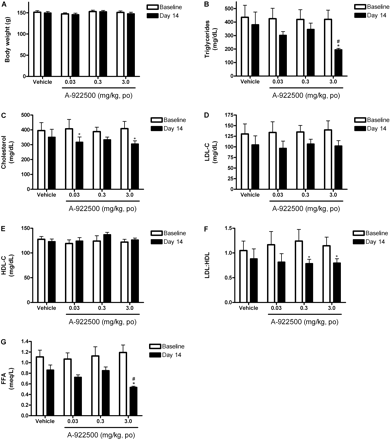
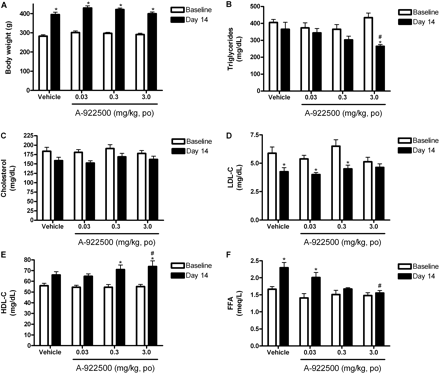
At all studied dosages, the DGAT-1 inhibitor A 922500 (A-922500) lowers blood triglyceride levels from baseline; however, this is only statistically significant at the 3 mg/kg dose, which lowers serum triglycerides by 53% on average. Similarly, serum FFA concentrations are considerably reduced by 55% and total cholesterol by 25% with the 3 mg/kg dose of A 922500. No studied dose of DGAT-1 inhibition significantly affects body weight. A 922500 at 0.3 and 3 mg/kg considerably improves the blood LDL/HDL-cholesterol ratio, even though it has little effect on LDL or HDL cholesterol individually. Treated with 3 mg/kg A 922500, blood triglyceride concentrations are dramatically reduced (39%), just as in the dyslipidemic hamster. In animals treated with vehicles, FFA levels rise dramatically over the course of 14 days. A 922500 inhibits this rise in a dose-dependent manner, resulting in 32% lower FFA concentrations after 14 days of treatment with the DGAT-1 inhibitor at 3 mg/kg when compared to the vehicle group (p < 0.05). A 922500 raises HDL-cholesterol from baseline levels considerably at doses of 0.3 and 3 mg/kg; however, this rise is only significant when compared to the vehicle at the 3 mg/kg dose. In rats treated with vehicles, body weight increases dramatically over a 2-week period; A 922500 has no effect on this. In the group receiving vehicle treatment, LDL cholesterol is much lower. Both LDL and total cholesterol are not further decreased by DGAT-1 inhibition[1].
Lipid-lowering efficacy in Zucker fatty rats: 1. Animals (male Zucker fatty rats, 8 weeks old, 350–400 g) were randomized into 4 groups (n=6/group): vehicle (0.5% CMC-Na), A922500 3 mg/kg/day, 10 mg/kg/day, 30 mg/kg/day [1] 2. Treatment: Daily oral gavage for 14 days. Fasting serum and liver samples were collected on day 14 [1] 3. Results: - Serum triglycerides (TG): Reduced by 25% (3 mg/kg), 40% (10 mg/kg), and 55% (30 mg/kg) vs. vehicle (vehicle TG: 850 ± 90 mg/dL); - Serum total cholesterol (TC): No significant change (vehicle TC: 180 ± 20 mg/dL); - Liver TG: Reduced by 18% (10 mg/kg) and 30% (30 mg/kg) vs. vehicle (vehicle liver TG: 150 ± 25 mg/g tissue); - No significant change in serum HDL-C or LDL-C [1] - Lipid-lowering efficacy in hyperlipidemic hamsters: 1. Animals (male Golden Syrian hamsters, 6 weeks old, 100–120 g) were fed a high-fat diet (40% fat) for 2 weeks to induce hyperlipidemia, then randomized into 3 groups (n=6/group): vehicle, A922500 10 mg/kg/day, 30 mg/kg/day [1] 2. Treatment: Daily oral gavage for 7 days (continued high-fat diet). Fasting serum samples were collected on day 7 [1] 3. Results: - Serum TG: Reduced by 35% (10 mg/kg) and 60% (30 mg/kg) vs. vehicle (vehicle TG: 620 ± 70 mg/dL); - Serum TC: Reduced by 12% (30 mg/kg) vs. vehicle (vehicle TC: 210 ± 25 mg/dL); - Serum HDL-C: Increased by 10% (30 mg/kg) vs. vehicle (vehicle HDL-C: 45 ± 5 mg/dL) [1] |
| Enzyme Assay |
Recombinant human DGAT1 activity assay:
The reaction system (200 μL) contained 50 mM Tris-HCl (pH 7.5), 5 mM MgCl2, 0.1% bovine serum albumin (BSA), 10 ng recombinant human DGAT1, 20 μM 1,2-diolein (DAG, substrate), 10 μM [14C]-oleoyl-CoA (radioactive acyl donor, specific activity 55 Ci/mmol), and A922500 (0.1–100 nM). The mixture was incubated at 37°C for 20 minutes to allow TG synthesis. The reaction was terminated by adding 500 μL of chloroform:methanol (2:1, v/v) to extract lipids. After centrifugation at 1000×g for 5 minutes, the organic phase was transferred to a new tube, evaporated to dryness, and resuspended in 100 μL chloroform. The resuspended lipids were spotted on a thin-layer chromatography (TLC) plate, developed with hexane:diethyl ether:acetic acid (80:20:1, v/v/v), and the TG band was visualized with iodine vapor. The TG band was scraped into a scintillation vial, and radioactivity was measured using a liquid scintillation counter. The inhibition rate was calculated by comparing with the vehicle group, and the IC50 was determined via non-linear regression curve fitting [1] |
| Cell Assay |
HepG2 cell triglyceride synthesis assay:
1. Cell culture: Human hepatoma HepG2 cells were seeded in 6-well plates at a density of 2×10⁵ cells/well and cultured in DMEM medium supplemented with 10% fetal bovine serum (FBS), 100 U/mL penicillin, and 100 μg/mL streptomycin at 37°C in a 5% CO2 incubator for 24 hours [1] 2. Drug treatment: The medium was replaced with serum-free DMEM containing A922500 (10 nM, 100 nM, 1000 nM) or vehicle (0.1% DMSO). After 1 hour of pre-incubation, 5 μCi/mL [14C]-oleate (complexed with 0.1% BSA) was added to each well, and cells were incubated for another 24 hours [1] 3. Lipid extraction and quantification: Cells were washed twice with ice-cold PBS, then lysed with 500 μL of chloroform:methanol (2:1, v/v). Lipids were extracted as described in the DGAT1 enzyme assay, and TG radioactivity was measured via liquid scintillation counting. Cell protein concentration was determined via BCA assay to normalize TG synthesis (expressed as dpm/mg protein) [1] 4. Cell viability assay: Parallel wells were treated with the same concentrations of A922500 for 24 hours, then MTT solution (5 mg/mL) was added and incubated for 4 hours. Formazan crystals were dissolved with DMSO, and absorbance at 570 nm was measured. Cell viability was calculated as (treated absorbance/vehicle absorbance) × 100% [1] |
| Animal Protocol |
Dissolved in Polyethylene glycol/hydroxypropyl-β-cyclodextrin (10% w/v); 0.03, 0.3, and 3 mg/kg; oral gavage
Male Golden Syrian hamsters with hyperlipidemia, and Male Zucker fatty rats Zucker fatty rat study: 1. Animals: Male Zucker fatty rats (fa/fa genotype, 8 weeks old, body weight 350–400 g) were housed under controlled conditions (22±2°C, 12-hour light/dark cycle) with free access to standard chow and water [1] 2. Grouping: Rats were randomly divided into 4 groups (n=6/group): - Vehicle group: 0.5% carboxymethyl cellulose sodium (CMC-Na) solution; - A922500 3 mg/kg/day group; - A922500 10 mg/kg/day group; - A922500 30 mg/kg/day group [1] 3. Drug preparation: A922500 was dissolved in DMSO (10% v/v) and diluted with 0.5% CMC-Na to the final concentration (DMSO final concentration ≤1%) [1] 4. Administration: Daily oral gavage at a volume of 10 mL/kg for 14 days. Rats were fasted for 6 hours before sample collection on day 14 [1] 5. Sample collection and detection: - Serum: Collected via orbital sinus puncture, centrifuged at 3000×g for 10 minutes, and analyzed for TG, TC, HDL-C, LDL-C (enzymatic kits); - Liver: Dissected after euthanasia, homogenized in ice-cold PBS, and liver TG was quantified via enzymatic kit [1] - Hyperlipidemic hamster study: 1. Animals: Male Golden Syrian hamsters (6 weeks old, body weight 100–120 g) were fed a high-fat diet (40% fat, 0.2% cholesterol) for 2 weeks to induce hyperlipidemia. They were housed under the same conditions as rats [1] 2. Grouping: Hamsters were randomized into 3 groups (n=6/group): vehicle, A922500 10 mg/kg/day, 30 mg/kg/day [1] 3. Drug preparation and administration: Same as the Zucker rat study; daily oral gavage for 7 days (continued high-fat diet) [1] 4. Sample collection and detection: Fasting serum was collected via cardiac puncture after euthanasia on day 7, and serum TG, TC, HDL-C were measured via enzymatic kits [1] |
| Toxicity/Toxicokinetics |
In vitro cytotoxicity: A922500 (at concentrations up to 1000 nM) did not show significant cytotoxicity in HepG2 cells, with cell viability >90% compared to the solvent control group (MTT assay, 24 hours of treatment) [1]
- In vivo safety: - In Zucker obese rats and hyperlipidemic hamsters, treatment with A922500 (at doses up to 30 mg/kg/day for 14 days and 7 days, respectively): - No significant change in body weight (<5% change in body weight compared to the solvent control group); - Serum liver function indicators (ALT, AST) and kidney function indicators (BUN, creatinine) were within the normal range (no significant difference compared to the solvent control group); - No obvious clinical symptoms of toxicity (e.g., somnolence, diarrhea, abnormal behavior) were observed [1] |
| References | |
| Additional Infomation |
A922500 is an aromatic ketone.
A922500 is a synthetic, selective diacylglycerol acyltransferase 1 (DGAT1) inhibitor—DGAT1 is a key enzyme that catalyzes the final step in the synthesis of triglycerides (TG) (the condensation of diacylglycerol and acyl-CoA to form TG)[1] - Its lipid-lowering mechanism is achieved by inhibiting DGAT1 in the liver and intestine: liver TG synthesis is reduced, thereby reducing hepatic lipid accumulation and serum TG secretion; inhibition of intestinal triglyceride (TG) synthesis reduces dietary lipid absorption, thereby synergistically reducing serum TG levels[1] - Preclinical studies in Zucker obese rats (a genetic model of obesity and hypertriglyceridemia) and high-fat diet-induced hyperlipidemia hamsters have demonstrated that A922500 has a dose-dependent effect on reducing serum TG with no significant effect on high-density lipoprotein cholesterol (HDL-C) (or a slight increase in HDL-C in hamsters), supporting its potential for treating hypertriglyceridemia[1] - Unlike non-selective lipid-lowering drugs, A922500 specifically targets DGAT1 without inhibiting DGAT2 (a DGAT isoenzyme crucial for TG storage in adipose tissue), thereby minimizing the risk of adverse reactions associated with adipose tissue dysfunction [1] |
| Molecular Formula |
C26H24N2O4
|
|
|---|---|---|
| Molecular Weight |
428.48
|
|
| Exact Mass |
428.173
|
|
| CAS # |
959122-11-3
|
|
| Related CAS # |
959122-11-3;
|
|
| PubChem CID |
24768261
|
|
| Appearance |
Off-white to yellow solid powder
|
|
| Density |
1.3±0.1 g/cm3
|
|
| Boiling Point |
576.1±50.0 °C at 760 mmHg
|
|
| Flash Point |
302.2±30.1 °C
|
|
| Vapour Pressure |
0.0±1.7 mmHg at 25°C
|
|
| Index of Refraction |
1.679
|
|
| LogP |
4.77
|
|
| Hydrogen Bond Donor Count |
3
|
|
| Hydrogen Bond Acceptor Count |
4
|
|
| Rotatable Bond Count |
6
|
|
| Heavy Atom Count |
32
|
|
| Complexity |
659
|
|
| Defined Atom Stereocenter Count |
2
|
|
| SMILES |
C1C[C@H]([C@@H](C1)C(=O)O)C(=O)C2=CC=C(C=C2)C3=CC=C(C=C3)NC(=O)NC4=CC=CC=C4
|
|
| InChi Key |
BOZRFEQDOFSZBV-DHIUTWEWSA-N
|
|
| InChi Code |
InChI=1S/C26H24N2O4/c29-24(22-7-4-8-23(22)25(30)31)19-11-9-17(10-12-19)18-13-15-21(16-14-18)28-26(32)27-20-5-2-1-3-6-20/h1-3,5-6,9-16,22-23H,4,7-8H2,(H,30,31)(H2,27,28,32)/t22-,23-/m1/s1
|
|
| Chemical Name |
(1R,2R)-2-[4-[4-(phenylcarbamoylamino)phenyl]benzoyl]cyclopentane-1-carboxylic acid
|
|
| Synonyms |
|
|
| HS Tariff Code |
2934.99.9001
|
|
| Storage |
Powder -20°C 3 years 4°C 2 years In solvent -80°C 6 months -20°C 1 month |
|
| Shipping Condition |
Room temperature (This product is stable at ambient temperature for a few days during ordinary shipping and time spent in Customs)
|
| Solubility (In Vitro) |
DMSO: 86 mg/mL (200.7 mM)
Water: 1 mg/mL (Insoluble) Ethanol: 1 mg/mL |
|---|---|
| Solubility (In Vivo) |
Solubility in Formulation 1: ≥ 2.5 mg/mL (5.83 mM) (saturation unknown) in 10% DMSO + 40% PEG300 + 5% Tween80 + 45% Saline (add these co-solvents sequentially from left to right, and one by one), clear solution.
For example, if 1 mL of working solution is to be prepared, you can add 100 μL of 25.0 mg/mL clear DMSO stock solution to 400 μL PEG300 and mix evenly; then add 50 μL Tween-80 to the above solution and mix evenly; then add 450 μL normal saline to adjust the volume to 1 mL. Preparation of saline: Dissolve 0.9 g of sodium chloride in 100 mL ddH₂ O to obtain a clear solution. Solubility in Formulation 2: 15% Captisol: 20mg/mL View More
Solubility in Formulation 3: 6.67 mg/mL (15.57 mM) in 50% PEG300 50% Saline (add these co-solvents sequentially from left to right, and one by one), suspension solution; with ultrasonication. |
| Preparing Stock Solutions | 1 mg | 5 mg | 10 mg | |
| 1 mM | 2.3338 mL | 11.6692 mL | 23.3383 mL | |
| 5 mM | 0.4668 mL | 2.3338 mL | 4.6677 mL | |
| 10 mM | 0.2334 mL | 1.1669 mL | 2.3338 mL |
*Note: Please select an appropriate solvent for the preparation of stock solution based on your experiment needs. For most products, DMSO can be used for preparing stock solutions (e.g. 5 mM, 10 mM, or 20 mM concentration); some products with high aqueous solubility may be dissolved in water directly. Solubility information is available at the above Solubility Data section. Once the stock solution is prepared, aliquot it to routine usage volumes and store at -20°C or -80°C. Avoid repeated freeze and thaw cycles.
Calculation results
Working concentration: mg/mL;
Method for preparing DMSO stock solution: mg drug pre-dissolved in μL DMSO (stock solution concentration mg/mL). Please contact us first if the concentration exceeds the DMSO solubility of the batch of drug.
Method for preparing in vivo formulation::Take μL DMSO stock solution, next add μL PEG300, mix and clarify, next addμL Tween 80, mix and clarify, next add μL ddH2O,mix and clarify.
(1) Please be sure that the solution is clear before the addition of next solvent. Dissolution methods like vortex, ultrasound or warming and heat may be used to aid dissolving.
(2) Be sure to add the solvent(s) in order.
|
|---|
|
|
Products are for research use only; We do not sell to patients
Copyright 2020 InvivoChem LLC | All Rights Reserved


 COA
COA