| Size | Price | Stock | Qty |
|---|---|---|---|
| 5mg |
|
||
| 10mg |
|
||
| 25mg |
|
||
| 50mg |
|
||
| 100mg |
|
||
| 250mg | |||
| 500mg | |||
| Other Sizes |
| Targets |
ORL-1 (opioid receptor like -1); mu opioid receptor; hNOP receptor (EC50 = 13 nM); hMOP receptor (EC50 = 1.2 nM); hKOP receptor (EC50 = 17 nM); hDOP receptor (EC50 = 110 nM)
Cebranopadol (trans-6'-fluoro-4',9'-dihydro-N,N-dimethyl-4-phenyl-spiro[cyclohexane-1,1'(3'H)-pyrano[3,4-b]indol]-4-amine/GRT-6005) targets human nociceptin/orphanin FQ peptide (NOP) receptor (Ki=0.9 nM, EC50=13.0 nM, relative efficacy=89%), human mu-opioid peptide (MOP) receptor (Ki=0.7 nM, EC50=1.2 nM, relative efficacy=104%), human kappa-opioid peptide (KOP) receptor (Ki=2.6 nM, EC50=17 nM, relative efficacy=67%), human delta-opioid peptide (DOP) receptor (Ki=18 nM, EC50=110 nM, relative efficacy=105%) [1] Cebranopadol is a dual agonist of NOP and opioid receptors [2,3] |
|---|---|
| ln Vitro |
With Ki values of 1±0.5 nM, 2.4±1.2 nM, and 64±11 nM for rat NOP, mu-opioid peptide (MOP) receptor, and kappa-opioid peptide (KOP) receptor, and 0.9±0.2 nM, 0.7±0.3 nM, and 2.6±1.4 nM for rat NOP, MOP, and KOP receptor, respectively, cebranopadol binds to opioid receptors with high affinity (subnanomolar to nanomolar range) to nociceptin/orphanin FQ peptide (NOP) and opioid receptors[1].
1. Receptor binding and activation assays confirmed Cebranopadol as a potent agonist of human NOP, MOP, KOP and DOP receptors with specific Ki, EC50 and relative efficacy values [1] |
| ln Vivo |
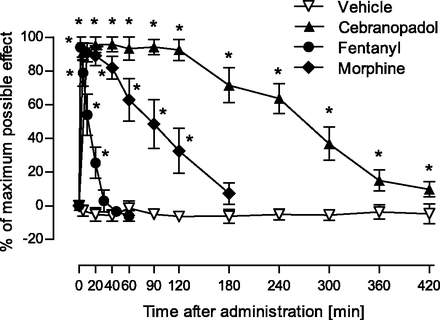
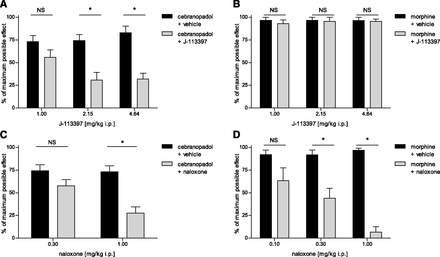
With ED50 values of 0.5-5.6 μg/kg after intravenous and 25.1 μg/kg after oral administration, cebrachanopadol demonstrates highly potent and efficacious antinociceptive and antihypersensitive effects in several rat models of acute and chronic pain (tail-flick, rheumatoid arthritis, bone cancer, spinal nerve ligation, and diabetic neuropathy). Cebranopadol is more effective in models of chronic neuropathic pain than acute nociceptive pain when compared to selective MOP receptor agonists. The long half-life of cebranopadol is demonstrated by its prolonged duration of action (up to 7 hours after intravenous 12 μg/kg; >9 hours after oral 55 μg/kg in the rat tail-flick test). Pretreatment with either opioid receptor antagonist naloxone or selective NOP receptor antagonist J-113397 partially reverses the antihypersensitive activity of cebranopadol in the spinal nerve ligation model, suggesting that both opioid receptor agonism and NOP are involved in this activity[1].
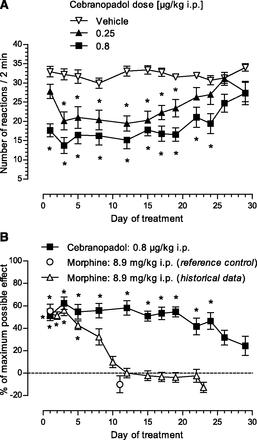
1. Analgesic activity in rat pain models: Cebranopadol exhibited potent antinociceptive/antihypersensitive effects in rat models of acute (tail-flick) and chronic pain (rheumatoid arthritis, bone cancer, spinal nerve ligation, diabetic neuropathy) with ED50 values of 0.5–5.6 µg/kg (intravenous) and 25.1 µg/kg (oral); it was more potent in chronic neuropathic pain models than acute nociceptive pain models compared to selective MOP agonists [1] 2. Duration of analgesic action in rats: Cebranopadol had a long duration of action (up to 7 hours after intravenous 12 µg/kg; >9 hours after oral 55 µg/kg in the rat tail-flick test) [1] 3. Mechanism of antihypersensitive activity in rats: The antihypersensitive activity of Cebranopadol in the spinal nerve ligation model was partially reversed by the selective NOP antagonist J-113397 or opioid antagonist naloxone, confirming involvement of both NOP and opioid receptor agonism [1] 4. Analgesic tolerance in rats: In the chronic constriction injury model, analgesic tolerance to Cebranopadol was delayed (complete tolerance on day 26) compared to equianalgesic dose of morphine (complete tolerance on day 11) [1] 5. Effect on cocaine addiction in rats: Oral Cebranopadol (25/50 μg/kg) reversed escalation of cocaine self-administration (0.5 mg/kg/infusion) in rats with extended (6-hour) access to cocaine, but did not affect sweetened condensed milk (SCM) self-administration; it blocked conditioned reinstatement of cocaine seeking [2] 6. Conditioned place preference in rats: Cebranopadol induced conditioned place preference but did not affect locomotor activity during conditioning sessions [2] 7. Analgesic activity in mouse pain models: Subcutaneous Cebranopadol (10 mg/kg) showed significant antinociceptive activity in acute pain models (hot plate, writhing, capsaicin tests), attenuated nocifensive responses in both phases of the formalin test (tonic pain), and reduced cold allodynia in oxaliplatin-induced neuropathic pain model (efficacy similar to morphine); its analgesic onset was slower than morphine (90–120 min vs. 60 min in hot plate test) [3] 8. Combination therapy in mice: Cebranopadol (10 mg/kg, s.c.) administered simultaneously, 4 h or 6 h after simvastatin did not potentiate antiallodynic activity of simvastatin in oxaliplatin-induced neuropathic pain model [3] |
| Enzyme Assay |
Cebranopadol (trans-6'-fluoro-4',9'-dihydro-N,N-dimethyl-4-phenyl-spiro[cyclohexane-1,1'(3'H)-pyrano[3,4-b]indol]-4-amine) is a novel analgesic nociceptin/orphanin FQ peptide (NOP) and opioid receptor agonist [Ki (nM)/EC50 (nM)/relative efficacy (%): human NOP receptor 0.9/13.0/89; human mu-opioid peptide (MOP) receptor 0.7/1.2/104; human kappa-opioid peptide receptor 2.6/17/67; human delta-opioid peptide receptor 18/110/105].[1]
Human MOP, DOP, KOP, and NOP receptor binding assays were run in microtiter plates with wheat germ agglutinin-coated scintillation proximity assay beads. [N-allyl-2,3-3H]naloxone and [tyrosyl-3,5-3H]deltorphin II, [3H]Ci-977, and [leucyl-3H]nociceptin were used as ligands for the MOP, DOP, KOP, and NOP receptor binding studies, respectively. The KD values of the radioligands used for the calculation of Ki values were provided as supplemental information. The assay buffer used for the MOP, DOP, and KOP receptor binding studies was 50 mM Tris-HCl (pH 7.4) supplemented with 0.052 mg/mL bovine serum albumin. For the NOP receptor binding studies, the assay buffer used was 50 mM HEPES, 10 mM MgCl2, 1 mM EDTA (pH 7.4). The final assay volume of 250 μL/well included 1 nM [3H]naloxone, 1 nM [3H]deltorphin II, 1 nM [3H]Ci-977, or 0.5 nM [3H]nociceptin as a ligand and cebranopadol in dilution series. Cebranopadol was diluted with 25% DMSO in water to yield a final 0.5% DMSO concentration, which also served as a respective vehicle control. Assays were started by the addition of beads (1 mg beads/well), which had been preloaded for 15 minutes at room temperature with 23.4 μg of human MOP membranes, 12.5 μg of human DOP membrane, 45 μg of human KOP membranes, or 25.4 µg of human NOP membranes per 250 µL of final assay volume. After short mixing, the assays were run for 90 minutes at room temperature. The microtiter plates were then centrifuged for 20 minutes at 500 rpm, and the signal rate was measured by means of a 1450 MicroBeta Trilux. IC50 values reflecting 50% displacement of [3H]naloxone-, [3H]deltorphin II-, [3H]Ci-977-, or [3H]nociceptin-specific receptor binding were calculated by nonlinear regression analysis. Individual experiments were run in duplicate and were repeated three times in independent experiments[1]. 1. Receptor binding assay for Cebranopadol: Radioligand binding assays were conducted to measure the Ki values of Cebranopadol for human NOP, MOP, KOP and DOP receptors; the affinity of Cebranopadol for each receptor was quantified by competitive binding with specific radioligands [1] 2. Receptor activation assay for Cebranopadol: Functional assays were performed to determine EC50 values and relative efficacy of Cebranopadol in activating human NOP, MOP, KOP and DOP receptors; receptor activation was assessed by measuring downstream signaling pathways (e.g., G-protein coupling) in recombinant cell lines expressing each receptor [1] |
| Cell Assay |
Cebranopadol was tested for its agonistic activity on human recombinant MOP, DOP, or NOP receptor-expressing cell membranes from Chinese hamster ovary K1 cells, or KOP receptor-expressing cell membranes from human embryonic kidney cell line 293 cells. For each assay, 10 µg of membrane proteins was incubated for 45 minutes at 25°C with 0.4 nM [35S]GTPγS (GE Healthcare) and various concentrations of agonists in a buffer containing 20 mM HEPES (pH 7.4), 100 mM NaCl, 10 mM MgCl2, 1 mM EDTA, 1 mM dithiothreitol, 1.28 mM NaN3, and 10 µM guanosine diphosphate. The bound radioactivity was calculated using the methods previously mentioned.
|
| Animal Protocol |
8.9 and 26.6 mg/kg s.c. for whole-body plethysmography test in conscious rats. Sprague-Dawley rats Cebranopadol was dissolved in vehicle that consisted of 5% dimethylsulfoxide, 5% Emulphor, and 90% distilled water. The solution was vortexed before filling a 1-ml syringe for oral injection. Cebranopadol was injected orally by gavage at doses of 0.0, 25, and 50 μg/kg. Cocaine HCl was dissolved in 0.9% saline at a dose of 0.5 mg/kg/infusion and self-administered intravenously. Sweetened condensed milk was diluted 2:1 (v/v) in water.[2]
Effect of Cebranopadol on the Escalation of Cocaine Self-Administration[2] Rats (n = 14) were trained to self-administer cocaine under a fixed-ratio 1 (FR1) schedule of reinforcement in daily 6-hour sessions. Each active lever press resulted in the delivery of one cocaine dose (0.5 mg/kg/0.1 ml infusion). A 20-second timeout (TO) period followed each cocaine infusion. During the timeout period, responses on the active lever did not have scheduled consequences. This TO period occurred concurrently with illumination of a cue light that was located above the active lever to signal delivery of the positive reinforcement. The rats were trained to self-administer cocaine in 15 sessions (5 days/week) until a stable baseline of reinforcement was achieved (<10% variation over the last three sessions). A within-subjects Latin-square design was used for the drug treatments. The rats were orally injected with cebranopadol (0, 25, and 50 μg/kg) 30 minutes before beginning the sessions. Oral administration was performed by gavage using a 19-gauge needle and 8 cm of Tygon tubing (0.030 inch inner diameter, 0.090 inch outer diameter). The animals were subjected to cocaine self-administration at 2-day intervals between drug tests. Effect of Cebranopadol on Sweetened Condensed Milk Self-Administration[2] Rats (n = 12) were trained to self-administer SCM under an FR1 schedule of reinforcement for 6 hours per day to match cocaine self-administration. After each SCM reward delivery, a 20-second TO period occurred, during which responses on the active lever had no scheduled consequences. This TO period occurred concurrently with illumination of a cue light that was located above the active lever to signal delivery of the positive reinforcement. The rats were trained to self-administer SCM for several days until a stable baseline of reinforcement was achieved (<10% variation over the last three sessions). When the stable baseline was reached, the rats orally received cebranopadol (0, 25, and 50 μg/kg) 30 minutes before beginning the next session. The animals were subjected to SCM self-administration at 2-day intervals between drug tests. Cebranopadol-Induced Conditioned Place Preference and Locomotor Activity[2] Cebranopadol-induced CPP was evaluated using a biased, counterbalanced CPP procedure. Naive rats (n = 9) were handled and habituated to oral administration for 1 week before beginning the study. The experiment consisted of three 30-minute phases: pretest (one session), conditioning (eight sessions), and preference test (one session). The rats were placed in a dim (40 lux) room 30 minutes before starting the tests. A two-chambered (38 cm × 32 cm × 32 cm) place conditioning apparatus was used, with visual cues on the walls (stripes or dots for compartments A and B, respectively) and tactile cues on the floor (smooth or rough for compartments A and B, respectively). On day 1 (pretest), naive rats were placed between the two chambers and allowed to freely explore both chambers for 30 minutes. Individual bias toward either compartment A or B was observed, and the animals were assigned to place conditioning subgroups according to their least-preferred compartment; therefore, biased assignment was used. Conditioning was performed within subjects. Each rat received cebranopadol (25 μg/kg orally) and vehicle on alternating days in a counterbalanced design 30 minutes before being placed in the conditioning chamber. The preference test was performed 24 hours after the last conditioning session. Thirty minutes after vehicle administration, the rats were placed in the nonconditioned side of the apparatus with free access to both chambers. The time spent in the different chambers was recorded. Locomotor activity was recorded in each phase (pretest, conditioning, and preference test) using a video camera that was connected to the ANY-maze Video Tracking System 5.11. Effect of Cebranopadol on Conditioned Reinstatement of Cocaine-seeking Behavior[2] Cocaine Self-Administration Training.[2] Rats (n = 10) were surgically prepared with indwelling microurethane catheters that were inserted in the right jugular vein. After 7 days of postsurgical recovery, the rats began self-administration training. The rats were trained to self-administer cocaine (0.5 mg/kg/0.1 ml infusion, i.v.) for 6 hours/day on an FR1 schedule in the presence of a contextual/discriminative stimulus (SD). Each session was initiated by extending two retractable levers into the operant conditioning chamber. Constant 70-dB white noise served as a discriminative stimulus that signaled availability of the reinforcer throughout the session. Responses on the right, active lever were reinforced with a dose of cocaine, followed by a 20-second TO period that was signaled by illumination of a cue light above the active lever. During this TO period, the lever remained inactive to prevent accidental overdosing with cocaine. Responses on the left, inactive lever had no scheduled consequences. Conditioned Reinstatement.[2] Two days later, the rats were presented with the SD. To evaluate the effect of cebranopadol on the conditioned reinstatement of cocaine seeking, the rats were treated with cebranopadol (0, 25, and 50 μg/kg) in a counterbalanced Latin-square design 30 minutes before the reinstatement test. The reinstatement test lasted 2 hours under SD conditions, except that cocaine was unavailable. Cebranopadol was administered only in the SD conditions, with a 2-day interval between tests. 1. Rat pain model protocol: Cebranopadol was administered to rats via intravenous (0.5–12 µg/kg) or oral (25.1–55 µg/kg) routes; antinociceptive/antihypersensitive effects were evaluated in tail-flick (acute pain), rheumatoid arthritis, bone cancer, spinal nerve ligation (neuropathic pain), diabetic neuropathy and chronic constriction injury models; J-113397 (NOP antagonist) or naloxone (opioid antagonist) were used to assess mechanism of action; rotarod test was used to evaluate motor coordination [1] 2. Rat cocaine self-administration protocol: Rats with extended (6-hour) access to cocaine self-administration (0.5 mg/kg/infusion) received oral Cebranopadol (0/25/50 μg/kg); lever responses for cocaine/SCM were recorded to assess drug effect on self-administration; conditioned place preference and locomotor activity were measured during conditioning sessions; conditioned reinstatement of cocaine seeking was evaluated by presenting contextual/discriminative stimuli [2] 3. Mouse pain model protocol: Cebranopadol (10 mg/kg) was administered subcutaneously to mice; antinociceptive activity was evaluated in hot plate (acute thermal pain), acetic acid-induced writhing (acute chemical pain), capsaicin (neurogenic pain), formalin (tonic inflammatory pain) and oxaliplatin-induced neuropathic pain models; cold allodynia was measured by cold plate test (2 °C); simvastatin (100 mg/kg, oral) was co-administered with Cebranopadol (simultaneously, 4 h or 6 h post-simvastatin) to assess combination effect; rotarod test was used to evaluate motor deficits [3] |
| Toxicity/Toxicokinetics |
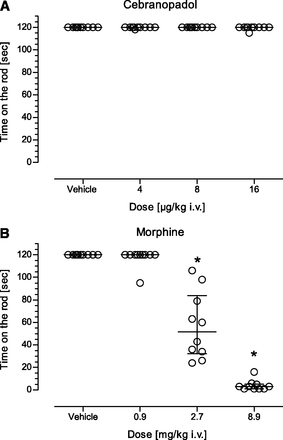
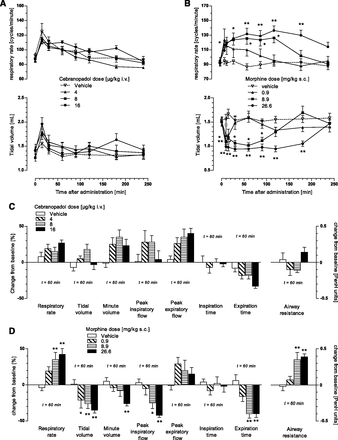
1. Safety in rats: Unlike morphine, Cebranopadol did not interfere with motor coordination and respiration at doses within and above the analgesic dose range [1] 2. Motor function in mice: Cebranopadol (10 mg/kg, subcutaneous injection) did not cause motor dysfunction in the rotarod test [3]
|
| References |
|
| Additional Infomation |
Cebranopadol belongs to the indole class of compounds. Cebranopadol has been used in clinical trials for the treatment of pain, cancer, and chronic pain. Cebranopadol is an orally effective benzene compound that acts as an opioid peptide receptor agonist for nociceptors/orphanone FQ receptors (opioid receptor-like 1; OPRL1; ORL-1; NOP; κ-type 3 opioid receptors) and classical opioid receptors (μ, δ, and κ), possessing potential anti-nociceptive activity. After oral administration, serbranopado binds to NOP and μ, δ, and κ opioid receptors, enhancing NOP and opioid receptor-mediated signaling, interfering with pain sensation, thereby producing an analgesic effect. NOP is a member of the opioid receptor family, and its endogenous ligand, nociceptin, plays a crucial role in regulating various brain activities, including pain, as well as some inflammatory and immune responses. Drug Indications: Treatment of chronic pain.
Cebranopadol (trans-6'-fluoro-4',9'-dihydro-N,N-dimethyl-4-phenyl-spiro[cyclohexane-1,1'(3'H)-pyrano[3,4-b]indole]-4-amine) is a novel analgesic that is a nociceptin/orphanone FQ peptide (NOP) and opioid receptor agonist [Ki (nM)/EC50 (nM)/relative efficacy (%): human NOP receptor 0.9/13.0/89; human μ-opioid peptide (MOP) receptor 0.7/1.2/104; cerebranopadol has affinity for human κ-opioid peptide receptor 2.6/17/67 and human δ-opioid peptide receptor 18/110/105. In various rat models of acute and chronic pain (tail-flick test, rheumatoid arthritis, bone cancer, spinal nerve ligation, and diabetic neuropathy), serbranopado demonstrated potent analgesic and anti-hyperalgesic effects, with an ED50 of 0.5–5.6 µg/kg after intravenous injection and 25.1 µg/kg after oral administration. Compared with selective MOP receptor agonists, serbranopado was more potent in chronic neuropathic pain models than in acute nociceptive pain models. The duration of action of serbranopado was long (up to 7 hours after intravenous injection of 12 µg/kg; and over 9 hours after oral administration of 55 µg/kg in the rat tail-flick test). In a spinal nerve ligation model, the analgesic activity of cebranopadol was partially reversed by pretreatment with the selective NOP receptor antagonist J-113397 [1-[(3R,4R)-1-cyclooctylmethyl-3-hydroxymethyl-4-piperidinyl]-3-ethyl-1,3-dihydro-2H-benzimidazole-2-one] or the opioid receptor antagonist naloxone, indicating that both NOP receptor and opioid receptor agonists are involved in this activity. In a chronic compression injury model, the development of analgesic tolerance to cebranopadol was significantly delayed compared to an equivalent analgesic dose of morphine (complete tolerance was achieved on days 26 and 11, respectively). Unlike morphine, cebranopadol did not interfere with motor coordination or respiration at doses within and above the analgesic dose range. Cebranopadol is a novel nociceptin/orphanone q (NOP) and opioid receptor agonist with analgesic effects, showing high analgesic efficacy in various pain models with minimal side effects. [1] Cebranopadol is currently undergoing phase II and III clinical trials for the treatment of chronic and acute pain. Recent evidence suggests that the combined action of opioid receptor and NOP receptor agonists may be a novel strategy for treating cocaine addiction. To further investigate these findings, we investigated the effects of Cebranopadol on cocaine self-administration (0.5 mg/kg/time) and conditioned relapse in rats with long-term cocaine exposure. Oral administration of sibranopaldo (0, 25, and 50 μg/kg) reversed the increase in cocaine self-administration after long-term (6-hour) free cocaine intake in rats, but had no effect on self-administration of sweetened condensed milk (SCM). Cebranopadoll induced conditioned position preference but did not affect motor activity during conditioned reflex training. In addition, sibranopado blocked relapse of conditioned cocaine cravings. These results suggest that oral sibranopado prevents addiction-like behaviors (i.e., increased intake and relapse), suggesting it may be a novel strategy for treating cocaine use disorder. However, the conditioned position preference observed after sibranopado administration suggests that the compound may have some intrinsic reward effect. [2] A limitation of this study is the lack of a comprehensive characterization of the pharmacokinetics and pharmacodynamics of sibranopado. We also did not assess the effect of sibranopado on the pharmacokinetics of cocaine. However, we considered the reduction in cocaine dose escalation to be unrelated to the possible pharmacokinetic effects of cocaine levels in the blood, as sibranopado effectively reduced conditioned relapse. In this study, its potential effect on cocaine levels in the blood was excluded due to the unavailability of cocaine. We also did not find any shift in the dose-response curve or specific receptors mediating its preclinical efficacy. Further research is needed to fully characterize the intensifying properties and potential abuse risks of cerebranopadol, especially given that we found that cerebranopadol can induce conditioned position preference. However, although such characterization studies are theoretically crucial for understanding the precise mechanism of action and advancing drug development, cerebranopadol has been shown to be well-tolerated in humans and is currently being tested for pain management in several clinical trials. In summary, this study provides preclinical evidence of the efficacy of cerebranopadol in reversing cocaine compulsion-like responses and cue-induced cocaine craving relapses. Cerebranopadol may be a novel treatment option for preventing cocaine abuse and relapse. [2] 1. Cerebranopadol is a novel spirocyclic indole derivative with dual agonist activity against NOP and opioid receptors and is designed as a potent analgesic with a good side effect profile. [1] 2. Cebranopadol is undergoing Phase II and Phase III clinical trials for the treatment of chronic and acute pain (diabetic neuropathic pain, cancer pain) [2,3]. 3. The dual NOP/opioid receptor agonist effect of cebranopadol may represent a novel strategy for treating cocaine use disorder, despite its inherent reward effect (conditioned place preference) [2]. 4. Cebranopadol has the potential to treat a variety of pain types in mice, including inflammatory and chemotherapy (oxaliplatin)-induced neuropathic pain [3]. 5. The delayed analgesic tolerance of cebranopadol compared to morphine is a key advantage for treating chronic pain [1]. |
| Molecular Formula |
C24H27FN2O
|
|
|---|---|---|
| Molecular Weight |
378.49
|
|
| Exact Mass |
378.21
|
|
| Elemental Analysis |
C, 68.34; H, 6.58; F, 4.00; N, 5.90; O, 15.17
|
|
| CAS # |
863513-91-1
|
|
| Related CAS # |
Cebranopadol ((1α,4α)stereoisomer);863513-93-3
|
|
| PubChem CID |
11848225
|
|
| Appearance |
Light yellow to yellow solid powder
|
|
| Density |
1.2±0.1 g/cm3
|
|
| Boiling Point |
547.5±50.0 °C at 760 mmHg
|
|
| Flash Point |
284.9±30.1 °C
|
|
| Vapour Pressure |
0.0±1.5 mmHg at 25°C
|
|
| Index of Refraction |
1.644
|
|
| LogP |
5.14
|
|
| Hydrogen Bond Donor Count |
1
|
|
| Hydrogen Bond Acceptor Count |
3
|
|
| Rotatable Bond Count |
2
|
|
| Heavy Atom Count |
28
|
|
| Complexity |
553
|
|
| Defined Atom Stereocenter Count |
0
|
|
| SMILES |
CN(C)C1(CCC2(CC1)C3=C(CCO2)C4=C(N3)C=CC(=C4)F)C5=CC=CC=C5
|
|
| InChi Key |
CSMVOZKEWSOFER-UHFFFAOYSA-N
|
|
| InChi Code |
InChI=1S/C24H27FN2O/c1-27(2)23(17-6-4-3-5-7-17)11-13-24(14-12-23)22-19(10-15-28-24)20-16-18(25)8-9-21(20)26-22/h3-9,16,26H,10-15H2,1-2H3
|
|
| Chemical Name |
6-fluoro-N,N-dimethyl-1'-phenylspiro[4,9-dihydro-3H-pyrano[3,4-b]indole-1,4'-cyclohexane]-1'-amine
|
|
| Synonyms |
|
|
| HS Tariff Code |
2934.99.9001
|
|
| Storage |
Powder -20°C 3 years 4°C 2 years In solvent -80°C 6 months -20°C 1 month |
|
| Shipping Condition |
Room temperature (This product is stable at ambient temperature for a few days during ordinary shipping and time spent in Customs)
|
| Solubility (In Vitro) |
DMSO: 10mM
Water: 1 mg/mL (Insoluble) Ethanol: |
|---|---|
| Solubility (In Vivo) |
Solubility in Formulation 1: 0.67 mg/mL (1.77 mM) in 10% DMSO + 40% PEG300 + 5% Tween80 + 45% Saline (add these co-solvents sequentially from left to right, and one by one), suspension solution; with sonication.
For example, if 1 mL of working solution is to be prepared, you can add 100 μL of 6.7 mg/mL clear DMSO stock solution to 400 μL PEG300 and mix evenly; then add 50 μL Tween-80 to the above solution and mix evenly; then add 450 μL normal saline to adjust the volume to 1 mL. Preparation of saline: Dissolve 0.9 g of sodium chloride in 100 mL ddH₂ O to obtain a clear solution. Solubility in Formulation 2: 0.67 mg/mL (1.77 mM) in 10% DMSO + 90% (20% SBE-β-CD in Saline) (add these co-solvents sequentially from left to right, and one by one), suspension solution; with ultrasonication. For example, if 1 mL of working solution is to be prepared, you can add 100 μL of 6.7 mg/mL clear DMSO stock solution to 900 μL of 20% SBE-β-CD physiological saline solution and mix evenly. Preparation of 20% SBE-β-CD in Saline (4°C,1 week): Dissolve 2 g SBE-β-CD in 10 mL saline to obtain a clear solution. View More
Solubility in Formulation 3: ≥ 0.67 mg/mL (1.77 mM) (saturation unknown) in 10% DMSO + 90% Corn Oil (add these co-solvents sequentially from left to right, and one by one), clear solution. |
| Preparing Stock Solutions | 1 mg | 5 mg | 10 mg | |
| 1 mM | 2.6421 mL | 13.2104 mL | 26.4208 mL | |
| 5 mM | 0.5284 mL | 2.6421 mL | 5.2842 mL | |
| 10 mM | 0.2642 mL | 1.3210 mL | 2.6421 mL |
*Note: Please select an appropriate solvent for the preparation of stock solution based on your experiment needs. For most products, DMSO can be used for preparing stock solutions (e.g. 5 mM, 10 mM, or 20 mM concentration); some products with high aqueous solubility may be dissolved in water directly. Solubility information is available at the above Solubility Data section. Once the stock solution is prepared, aliquot it to routine usage volumes and store at -20°C or -80°C. Avoid repeated freeze and thaw cycles.
Calculation results
Working concentration: mg/mL;
Method for preparing DMSO stock solution: mg drug pre-dissolved in μL DMSO (stock solution concentration mg/mL). Please contact us first if the concentration exceeds the DMSO solubility of the batch of drug.
Method for preparing in vivo formulation::Take μL DMSO stock solution, next add μL PEG300, mix and clarify, next addμL Tween 80, mix and clarify, next add μL ddH2O,mix and clarify.
(1) Please be sure that the solution is clear before the addition of next solvent. Dissolution methods like vortex, ultrasound or warming and heat may be used to aid dissolving.
(2) Be sure to add the solvent(s) in order.
Link: https://clinicaltrials.gov/ct2/show/NCT06423703
Conditions:Acute PainLink: https://clinicaltrials.gov/ct2/show/NCT06545097
Conditions:Acute PainLink: https://clinicaltrials.gov/ct2/show/NCT06453265
Conditions:Abuse, Drug
Title:Safety and Efficacy of GRT6005 in Pain Due to Diabetic Polyneuropathy
Status:Completed
updateDate:2021-07-15
Ctid:NCT01347671
Link: https://clinicaltrials.gov/ct2/show/NCT01347671
Conditions:Pain|Diabetic NeuropathiesLink: https://clinicaltrials.gov/ct2/show/NCT02031432
Conditions:Pain|Neoplasms|Chronic PainLink: https://clinicaltrials.gov/ct2/show/NCT01964378
Conditions:Pain|Neoplasms|Chronic PainLink: https://clinicaltrials.gov/ct2/show/NCT03757559
Conditions:Abuse, DrugLink: https://clinicaltrials.gov/ct2/show/NCT01725087
Conditions:Low Back PainLink: https://clinicaltrials.gov/ct2/show/NCT01357837
Conditions:Osteoarthritis of the KneeLink: https://clinicaltrials.gov/ct2/show/NCT00872885
Conditions:Post Operative PainLink: https://clinicaltrials.gov/ct2/show/NCT00878293
Conditions:Diabetic PolyneuropathyLink: https://www.clinicaltrialsregister.eu/ctr-search/search?query=2008-004794-18
Condition:painful diabetic polyneuropathyLink: https://www.clinicaltrialsregister.eu/ctr-search/search?query=2010-022557-42
Condition:Pain due to diabetic polyneuropathy.
Duration of action of cebranopadol (12µg/kg) compared with fentanyl (9.4µg/kg) and morphine (1.9 mg/kg) after intravenous administration in the rat tail-flick test.J Pharmacol Exp Ther.2014 Jun;349(3):535-48. |
|---|
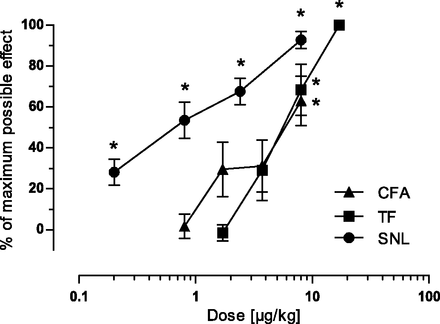
Analgesic effect of cebranopadol on spinal nerve ligation-induced mononeuropathic pain (SNL) and complete Freund’s adjuvant-induced chronic rheumatoid arthritic pain (CFA) 30 minutes after, and on tail flick-induced heat nociception (TF) 20 minutes after intravenous administration.J Pharmacol Exp Ther.2014 Jun;349(3):535-48. |
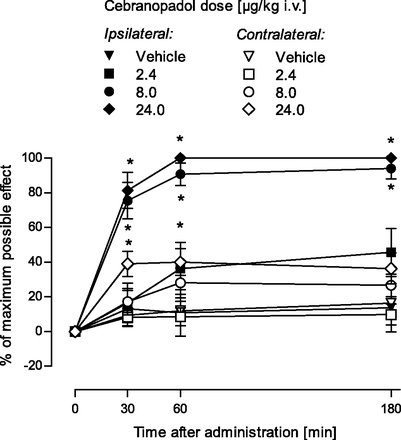
Effect of intravenous cebranopadol on mechanical sensitivity in the ipsilateral and contralateral paws in a rat model of bone cancer pain.J Pharmacol Exp Ther.2014 Jun;349(3):535-48. |
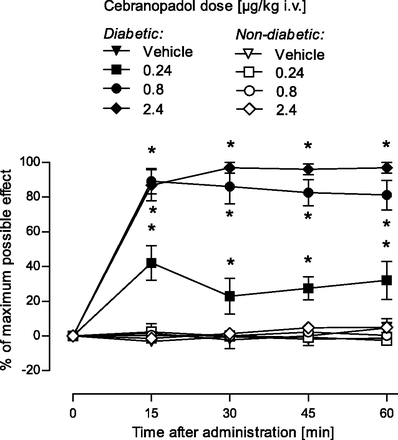
Antihyperalgesic activity of cebranopadol in streptozotocin (STZ)-treated and control rats measured as % MPE (mean ± S.E.M.;n= 10) by means of a paw pressure test in a model of STZ-induced diabetic polyneuropathy.J Pharmacol Exp Ther.2014 Jun;349(3):535-48. |
|---|
Effect of 1.0, 2.15, and 4.64 mg/kg i.p. J-113397 on the antihypersensitive effect of 1.7μg/kg i.v. cebranopadol (A) and 8.9 mg/kg i.v. morphine (B) in the spinal nerve ligation (SNL) model. Effect of 0.3 and 1.0 mg/kg i.p. naloxone on the antihypersensitive effect of 1.7μg/kg i.v. cebranopadol (C) and of 0.1, 0.3, and 1.0 mg/kg i.p.naloxone on the antihypersensitive effect of 8.9 mg/kg i.v. morphine (D) in the SNL model. Data are given as percentage of maximum possible effect (mean ± S.E.M.;n= 10) measured with an electronic von Frey filament based on the measurement of ipsilateral withdrawal thresholds 30 minutes after administration of cebranopadol or morphine.J Pharmacol Exp Ther.2014 Jun;349(3):535-48. |
Antiallodynic effect of repeated daily intraperitoneal administration of cebranopadol or vehicle as measured by number of paw lifts from a cold plate during 2 minutes (mean ± S.E.M.;n= 13–15) (A) or % MPE (B) in the chronic constriction injury model.J Pharmacol Exp Ther.2014 Jun;349(3):535-48. |
Dose-dependent effects of cebranopadol (A) and morphine (B) on motor coordination in rats.J Pharmacol Exp Ther.2014 Jun;349(3):535-48. |
|---|
Effects of cebranopadol (A and C) and morphine (B and D) on respiratory function in the whole-body plethysmography test in conscious rats.J Pharmacol Exp Ther.2014 Jun;349(3):535-48. |
Products are for research use only; We do not sell to patients
Copyright 2020 InvivoChem LLC | All Rights Reserved