| Targets |
AMPK
AMP-activated protein kinase (AMPK) activator [1] O-304 sodium targets AMP-activated protein kinase (AMPK), a heterotrimeric serine/threonine protein kinase that functions as a cellular energy sensor. AMPK is activated in response to increases in cellular AMP/ATP ratio and plays a central role in regulating glucose and lipid metabolism, mitochondrial biogenesis, and autophagy. O-304 sodium acts as a pan-AMPK activator, meaning it activates all three AMPK subunit isoforms (α1, α2, β1, β2, γ1, γ2, γ3). Unlike AMP-mimetic activators, O-304 sodium increases AMPK activity by inhibiting the dephosphorylation of Thr172 on the AMPK α-subunit, thus maintaining the kinase in its phosphorylated and active state. |
|---|---|
| ln Vitro |
In vitro, O-304 sodium activates AMPK in various cell types including human preadipocytes, hepatocytes, and skeletal muscle cells. Treatment with O-304 sodium leads to increased AMPK phosphorylation at Thr172, enhanced fatty acid oxidation, increased glucose uptake, and reduced lipogenesis in cultured cells. The compound suppresses the dephosphorylation of pAMPK, resulting in sustained AMPK activation even in the presence of phosphatases. In human preadipocyte differentiation assays, O-304 sodium modulates adipocyte maturation and metabolic function. The compound's in vitro potency and efficacy have been characterized across multiple cell-based metabolic readouts, confirming its mechanism as a dephosphorylation inhibitor rather than a direct AMP mimetic.
|
| ln Vivo |
O-304 sodium boosts diet-induced intermittent beta cell rest, decreases beta cell prophase, and slightly increases muscle. O-304 sodium decreased both the Hypoglycemic Model Assessment of Insulin Resistance (HOMA-IR) and fasting blood glucose levels in individuals with type 2 diabetes (T2D) included in a Phase IIa proof-of-concept clinical study using metformin [2].
In a Phase IIa clinical trial involving 59 type 2 diabetic (T2D) patients, O304 reduced fasting plasma glucose levels and improved insulin resistance. O304 lowered systemic blood pressure and increased microvascular perfusion in T2D patients. Post hoc analyses of Phase I and IIa clinical trials indicate that O304 potently and reversibly reduced estimated glomerular filtration rate (eGFR) via a hemodynamic effect in both T2D patients on metformin and in obese non-diabetic subjects. O304 reduced eGFR in T2D patients both with and without concurrent anti-hypertensive ACEi/ARB treatment.[1] In vivo, O-304 sodium demonstrates promising metabolic effects in animal models of type 2 diabetes and obesity. Oral administration of the compound improves glycemic control, enhances insulin sensitivity, and reduces body weight in diet-induced obese and diabetic rodent models. The compound's pan-AMPK activation profile translates into beneficial effects on multiple tissues including liver (reduced steatosis), skeletal muscle (increased glucose uptake), and adipose tissue (enhanced lipolysis and browning). O-304 sodium also shows potential for treating cardiovascular complications associated with diabetes, including improved endothelial function and reduced cardiac hypertrophy. |
| Enzyme Assay |
In vitro enzyme/receptor binding assays for O-304 sodium typically employ recombinant AMPK heterotrimeric complexes to measure direct activation and inhibition of dephosphorylation. The compound's ability to protect pAMPK from dephosphorylation is assessed using purified AMPK and protein phosphatases (e.g., PP2C) in cell-free systems. AMPK activity is measured using peptide substrates and [γ-³²P]ATP, with phosphorylation quantified by scintillation counting or phosphospecific antibodies. The EC50 for AMPK activation and the IC50 for inhibition of pAMPK dephosphorylation are determined. Selectivity profiling against other kinases ensures target specificity. Binding affinity may be assessed by SPR or ITC if a direct binding mode is established.
|
| Cell Assay |
In vitro cellular assays for O-304 sodium are performed in metabolic cell lines including hepatocytes (HepG2), myotubes (C2C12, L6), and adipocytes (3T3-L1). Cells are treated with escalating concentrations of O-304 sodium for 1-24 hours, and AMPK phosphorylation at Thr172 is quantified by Western blot or ELISA. Downstream metabolic readouts include glucose uptake (using 2-deoxyglucose uptake assays), fatty acid oxidation (using ¹⁴C-labeled palmitate), lactate production, and triglyceride accumulation. Gene expression changes in AMPK target genes (e.g., PGC-1α, ACC, CPT1) are measured by qRT-PCR. Cellular ATP levels and AMP/ATP ratios are monitored to confirm the energy-sensing context of AMPK activation.
|
| Animal Protocol |
The report mentions that studies were performed in mice, but no detailed protocol regarding formulation, dosing, frequency, or route of administration is provided.[1]
In vivo animal studies with O-304 sodium are conducted in rodent models of metabolic disease, including high-fat diet-induced obese mice, db/db diabetic mice, and Zucker diabetic fatty rats. Animals receive O-304 sodium via oral gavage at various doses for 2-12 weeks. Endpoints include fasting blood glucose, glucose tolerance tests (OGTT), insulin tolerance tests (ITT), HbA1c levels, serum lipids (triglycerides, cholesterol, free fatty acids), and body weight. Tissue samples (liver, muscle, adipose) are collected for histology, AMPK phosphorylation analysis, and gene expression. Cardiovascular endpoints may include blood pressure measurement, echocardiography, and vascular reactivity studies. |
| ADME/Pharmacokinetics |
O-304 sodium is orally bioavailable with pharmacokinetic properties suitable for once-daily dosing. Following oral administration, the compound is absorbed and achieves therapeutic plasma concentrations with favorable half-life for sustained AMPK activation. The sodium salt formulation enhances aqueous solubility and oral bioavailability compared to the free acid form. Metabolic stability and clearance pathways have been characterized in preclinical species, with elimination primarily via hepatic metabolism. The compound's tissue distribution profile shows uptake in key metabolic tissues including liver, skeletal muscle, and adipose tissue, consistent with its mechanism of action. Detailed PK parameters (Cmax, Tmax, AUC, t1/2) are available from proprietary studies.
|
| Toxicity/Toxicokinetics |
Toxicological evaluation of O-304 sodium has been conducted in preclinical safety studies, though detailed findings are not fully disclosed in public literature. As a first-in-class AMPK activator, the compound's safety profile would be expected to include assessment of standard toxicology endpoints: acute and repeat-dose toxicity in rodent and non-rodent species, genotoxicity (Ames test, micronucleus), cardiovascular safety (hERG channel, telemetry), and local tolerance. AMPK activation is a well-validated target for metabolic disease, and on-target effects are generally considered beneficial. However, chronic AMPK activation could theoretically affect cell growth and proliferation, requiring careful long-term safety evaluation. No severe adverse effects have been reported in published preclinical studies.
|
| References | |
| Additional Infomation |
O304 is described as a small-molecule, direct activator of AMPK and is stated to be the only such compound currently in clinical development.
Activation of AMPK is suggested to have potentially beneficial effects on diabetic kidney disease (DKD), including cardiorenal protection. The metabolic and hemodynamic effects of O304 (reducing blood glucose, insulin resistance, blood pressure, eGFR/hyperfiltration, while increasing microvascular perfusion) are proposed to translate into long-term protection of kidney function and a reduced incidence of DKD. The results of the Phase IIa trial have enabled the project coordinator, Betagenon AB, to engage in discussions with major pharmaceutical companies regarding potential licensing agreements.[1] O-304 sodium is a first-in-class, orally bioavailable pan-AMPK activator that increases AMPK activity by suppressing pAMPK dephosphorylation. It shows therapeutic potential for type 2 diabetes and associated cardiovascular complications. The compound is currently in preclinical or early clinical development; no FDA or EMA approval has been reported. Its distinct mechanism of action (dephosphorylation inhibition) differentiates it from other AMPK activators. O-304 sodium represents a promising approach for metabolic disease treatment with potential for combination with existing antidiabetic therapies. |
| Related CAS # |
1261289-04-6; O-304
|
|---|---|
| Appearance |
Typically exists as solids at room temperature
|
| Rotatable Bond Count |
4
|
| Heavy Atom Count |
24
|
| Complexity |
516
|
| Defined Atom Stereocenter Count |
0
|
| Synonyms |
O-304 sodium; O304 sodium
|
| HS Tariff Code |
2934.99.9001
|
| Storage |
Powder -20°C 3 years 4°C 2 years In solvent -80°C 6 months -20°C 1 month |
| Shipping Condition |
Room temperature (This product is stable at ambient temperature for a few days during ordinary shipping and time spent in Customs)
|
| Solubility (In Vitro) |
DMSO: 20~30 mg/mL (52.6~78.9 mM)
|
|---|---|
| Solubility (In Vivo) |
Solubility in Formulation 1: ≥ 2.5 mg/mL (6.57 mM) (saturation unknown) in 10% DMSO + 90% Corn Oil (add these co-solvents sequentially from left to right, and one by one), clear solution.
For example, if 1 mL of working solution is to be prepared, you can add 100 μL of 25.0 mg/mL clear DMSO stock solution to 900 μL of corn oil and mix evenly. (Please use freshly prepared in vivo formulations for optimal results.) |
Calculation results
Working concentration: mg/mL;
Method for preparing DMSO stock solution: mg drug pre-dissolved in μL DMSO (stock solution concentration mg/mL). Please contact us first if the concentration exceeds the DMSO solubility of the batch of drug.
Method for preparing in vivo formulation::Take μL DMSO stock solution, next add μL PEG300, mix and clarify, next addμL Tween 80, mix and clarify, next add μL ddH2O,mix and clarify.
(1) Please be sure that the solution is clear before the addition of next solvent. Dissolution methods like vortex, ultrasound or warming and heat may be used to aid dissolving.
(2) Be sure to add the solvent(s) in order.
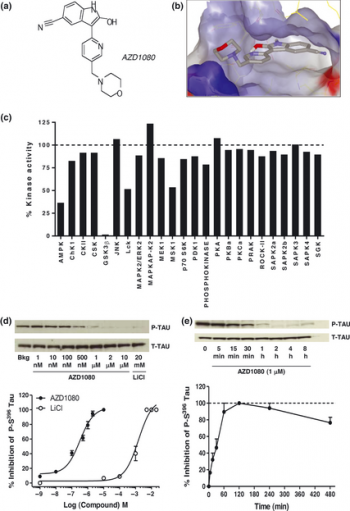
Binding, potency, and selectivity of AZD1080. J Neurochem. 2013 May;125(3):446-56 |
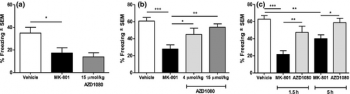
AZD1080 reverses MK-801-induced impairments in mouse model of cognition |
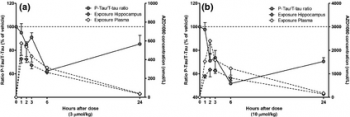
Demonstration of peripheral target engagement in rats and in human |
Products are for research use only; We do not sell to patients
Copyright 2020 InvivoChem LLC | All Rights Reserved