
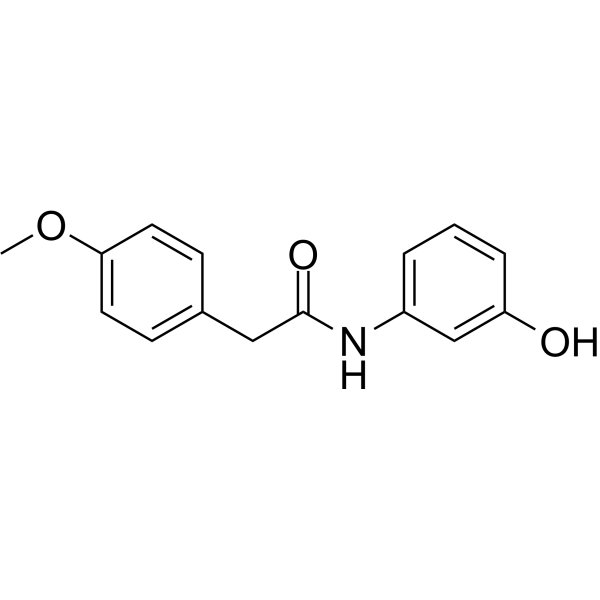


| Targets |
NLRP3/AIM2-IN-2 targets the NLRP3 and AIM2 inflammasomes. It inhibits the activation of caspase-1, a key event in inflammasome signaling, and prevents the processing and secretion of IL-1β and IL-18. By inhibiting these inflammasomes, it reduces the inflammatory response.
|
|---|---|
| ln Vitro |
In vitro, NLRP3/AIM2-IN-2 is a potent inhibitor of inflammasome activation. It reduces the secretion of IL-1β and IL-18 in response to various inflammasome stimuli. Its potency is typically measured by its IC50 in cell-based inflammasome activation assays.
|
| ln Vivo |
In vivo, NLRP3/AIM2-IN-2 has demonstrated efficacy in preclinical models of inflammasome-driven diseases. In these models, it reduces inflammation and disease severity. Its ability to inhibit IL-1β and IL-18 production in target tissues confirms target engagement.
|
| Enzyme Assay |
The activity of NLRP3/AIM2-IN-2 is assessed using cell-based inflammasome activation assays. Cells, such as macrophages, are primed with LPS and then stimulated with an inflammasome activator. The secretion of IL-1β and IL-18 is measured by ELISA. The compound's ability to inhibit these processes is quantified.
|
| Cell Assay |
The cellular activity of NLRP3/AIM2-IN-2 is evaluated in primary macrophages or cell lines, such as THP-1 cells. Cells are treated with the compound and then stimulated with inflammasome activators. The levels of IL-1β and IL-18 in the supernatant are measured by ELISA. The compound's effect on cell viability is also monitored.
|
| Animal Protocol |
In animal studies, NLRP3/AIM2-IN-2 is typically administered to mice via oral or intraperitoneal injection. In models of inflammasome-driven diseases, it is given to assess its effect on disease severity and inflammatory markers.
|
| ADME/Pharmacokinetics |
NLRP3/AIM2-IN-2 is a small molecule with a molecular weight of approximately 400 g/mol. It is soluble in DMSO and is typically stored as a powder at -20°C. Detailed pharmacokinetic parameters are available from preclinical studies.
|
| Toxicity/Toxicokinetics |
Toxicology data for NLRP3/AIM2-IN-2 is limited, as it is a research compound. Its safety profile has not been established in formal toxicology studies. Its use is limited to research applications.
|
| References | |
| Additional Infomation |
NLRP3/AIM2-IN-2 (CAS: 791840-86-3) is a valuable research tool for studying the role of the NLRP3 and AIM2 inflammasomes in disease. By inhibiting these key inflammatory complexes, it provides a means to investigate the contribution of inflammasome-driven inflammation to various pathological conditions. It is a key compound for validating inflammasomes as therapeutic targets.
|
| Exact Mass |
257.105
|
|---|---|
| CAS # |
791840-86-3
|
| PubChem CID |
1234617
|
| Appearance |
White to off-white solid powder
|
| LogP |
2.2
|
| Hydrogen Bond Donor Count |
2
|
| Hydrogen Bond Acceptor Count |
3
|
| Rotatable Bond Count |
4
|
| Heavy Atom Count |
19
|
| Complexity |
287
|
| Defined Atom Stereocenter Count |
0
|
| InChi Key |
OTXSEOHBMQFDBM-UHFFFAOYSA-N
|
| InChi Code |
InChI=1S/C15H15NO3/c1-19-14-7-5-11(6-8-14)9-15(18)16-12-3-2-4-13(17)10-12/h2-8,10,17H,9H2,1H3,(H,16,18)
|
| Chemical Name |
N-(3-hydroxyphenyl)-2-(4-methoxyphenyl)acetamide
|
| HS Tariff Code |
2934.99.9001
|
| Storage |
Powder -20°C 3 years 4°C 2 years In solvent -80°C 6 months -20°C 1 month |
| Shipping Condition |
Room temperature (This product is stable at ambient temperature for a few days during ordinary shipping and time spent in Customs)
|
| Solubility (In Vitro) |
DMSO : ~125 mg/mL (~485.85 mM)
|
|---|---|
| Solubility (In Vivo) |
Solubility in Formulation 1: ≥ 2.08 mg/mL (8.08 mM) (saturation unknown) in 10% DMSO + 40% PEG300 + 5% Tween80 + 45% Saline (add these co-solvents sequentially from left to right, and one by one), clear solution.
For example, if 1 mL of working solution is to be prepared, you can add 100 μL of 20.8 mg/mL clear DMSO stock solution to 400 μL PEG300 and mix evenly; then add 50 μL Tween-80 to the above solution and mix evenly; then add 450 μL normal saline to adjust the volume to 1 mL. Preparation of saline: Dissolve 0.9 g of sodium chloride in 100 mL ddH₂ O to obtain a clear solution. Solubility in Formulation 2: ≥ 2.08 mg/mL (8.08 mM) (saturation unknown) in 10% DMSO + 90% (20% SBE-β-CD in Saline) (add these co-solvents sequentially from left to right, and one by one), clear solution. For example, if 1 mL of working solution is to be prepared, you can add 100 μL of 20.8 mg/mL clear DMSO stock solution to 900 μL of 20% SBE-β-CD physiological saline solution and mix evenly. Preparation of 20% SBE-β-CD in Saline (4°C,1 week): Dissolve 2 g SBE-β-CD in 10 mL saline to obtain a clear solution. View More
Solubility in Formulation 3: ≥ 2.08 mg/mL (8.08 mM) (saturation unknown) in 10% DMSO + 90% Corn Oil (add these co-solvents sequentially from left to right, and one by one), clear solution. |
Calculation results
Working concentration: mg/mL;
Method for preparing DMSO stock solution: mg drug pre-dissolved in μL DMSO (stock solution concentration mg/mL). Please contact us first if the concentration exceeds the DMSO solubility of the batch of drug.
Method for preparing in vivo formulation::Take μL DMSO stock solution, next add μL PEG300, mix and clarify, next addμL Tween 80, mix and clarify, next add μL ddH2O,mix and clarify.
(1) Please be sure that the solution is clear before the addition of next solvent. Dissolution methods like vortex, ultrasound or warming and heat may be used to aid dissolving.
(2) Be sure to add the solvent(s) in order.
Products are for research use only; We do not sell to patients
Copyright 2020 InvivoChem LLC | All Rights Reserved


